
The Rise of the Hybrid Heating and Cooling in Modern Massachusetts
Fuel Sources, Electrification, Mass Save & What It Means for Your Home on the North Shore
In just the last two decades, home heating and cooling on the North Shore has transformed more than it did in the century before.
If you’re a homeowner in Marblehead, Salem, Gloucester, Swampscott, Andover, or anywhere throughout Essex County, the differences are noticeable. Replacing a boiler used to be a straightforward conversation. Now it’s about electrification, Mass Save incentives, hybrid setups, coastal power outages, cooling performance, indoor air quality, and long-term operating costs.
It can be a lot to take in.
Here’s the reality. One answer isn’t necessarily right for every home in Massachusetts. Your heating and cooling solution should be based on how your house was built, how it performs in the winter and summer months, what utility sources you have access to, and how long you plan to stay in your home.
Massachusetts has some of the oldest housing stock in the country, which matters when considering all of this. A 1925 saltbox in Swampscott is not the same as a 1998 Cape Cod in Andover. And neither of those homes should be treated like new construction built last year.
Where Do Most Homes in Massachusetts Get Their Heat?
Understanding where we are now can help guide what comes next. According to the U.S. Energy Information Administration, Massachusetts’ primary heating fuel source remains natural gas. The second most popular option is heating oil, serving more than one-quarter of homes statewide. Electricity, including heat pumps, has grown over the last decade, but has not replaced gas or oil as the primary heating source.
Current Heating Fuel Mix
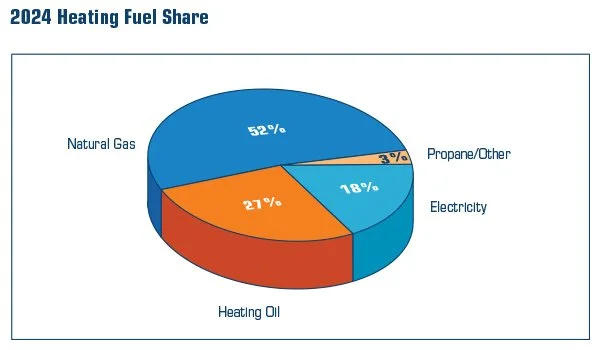
Natural gas remains the dominant heating fuel in Massachusetts, while heating oil continues to serve more than one in four homes. Electricity, including cold-climate heat pumps, is growing but has not yet replaced fossil fuels as the primary source of heat. The transition toward electrification is underway, but it is gradual.
2024 vs 2030 Directional Projection
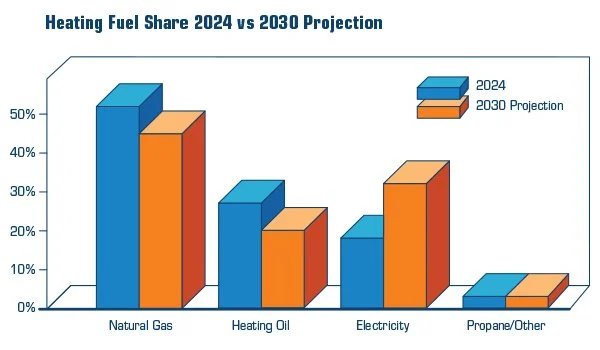
Massachusetts climate policy and Mass Save incentives are driving increased adoption of electric heating systems. While electrification is expected to grow significantly by 2030, oil and natural gas will remain part of the heating landscape due to housing age and infrastructure realities.
Why Does This Matter?
With so much discussion about electrification and rebates for electric heat pumps, it’s easy to think that every home in Massachusetts should just toss out its old furnace.
The truth is, most homes across the Commonwealth still heat with a combustion system. Change is happening, but it’s happening slowly. If you’re a homeowner on the North Shore, that means you aren’t “behind” if you heat with oil or gas. You’re right where you should be.
What Direction is Massachusetts Heating Policy Moving?
The Commonwealth passed the Climate Roadmap Act in 2021, which made legal emissions limits. By 2030, Massachusetts must reduce emissions to 50% below 1990 levels. By 2050, we must hit net-zero emissions. Mass Save programs have been updated to match that sentiment.
Years ago, homeowners were encouraged to convert from oil to gas. While reducing oil consumption remained a priority, natural gas was once viewed as the cleaner alternative. That thinking has since evolved.
Mass Save now focuses on three main priorities:
Cold-climate heat pumps capable of heating and cooling throughout New England winters.
Insulation and air sealing to decrease heating demand and increase system efficiency.
Whole-home electrification plans that look at how every piece of your house operates, not just one system.
Oil and gas heating isn’t going away anytime soon, but incentives are increasingly favoring electric setups.
Is Massachusetts Banning Heating Systems That Are NOT Electric?
This question comes up often, and it deserves a clear answer.
Here it is. No. Massachusetts has not banned the installation of new non-electric heating systems.
You can still have gas furnaces and boilers repaired or replaced in your home. However, the 2026 Mass Save update eliminated most rebates for new fossil-fuel heating equipment statewide. That update has caused some confusion.
Let’s be clear:
Gas furnaces and boilers are not illegal.
Oil heat isn’t going away in the North Shore.
Massachusetts policy direction is electrification.
Energy incentives encourage electrification.
As homeowners, we can still make our best decisions based on what we plan to do long-term with our home, not what gives us the biggest rebate right now. If you’re wondering how this applies to you, that’s where system evaluations with your preferences in mind can help.
Different Heating Strategies for Every Age Home
Your home’s age plays a bigger role in determining what your best options are than most realize.
Many homes on the North Shore were built before air conditioning became popular. In historic houses across Salem, Marblehead, and Gloucester, you’ll find homes with steam heat and cast-iron radiators. These systems are incredibly durable and comfortable. However, they weren’t made to cool your home. If you have a system this old, you’re likely looking at a boiler replacement, converting from oil to gas, adding a ductless heat pump system, or installing a hybrid setup.
Baseboard heat is common in homes built from roughly 1950 to 1980. Like radiant systems, hydronic baseboards are reliable and comfortable. But again, these systems were never designed with AC in mind. Today, many homeowners on the North Shore choose hybrid heating systems to get the benefits of a heat pump in milder weather and use their traditional system for extreme cold.
Gas furnaces and ductwork are becoming more common in mid-century homes built between the 1980s and 1990s. Heat pumps work in these homes, but proper insulation and electrical capacity should be considered as well. If you have a modern home built to high-efficiency standards with quality insulation and air sealing, your home may be a great candidate for full-electric functioning.
Every home is different. That’s why your system should be designed with your house in mind.
Think Cooling, Not Just Heating
Many of our conversations with homeowners begin with cooling, not heating. North Shore homes have historically used window air conditioners. They’re loud, they leak air outside, and they struggle on humid days. According to NOAA climate data, average temperatures and humidity have risen in recent years across the Northeast. People have come to expect more comfort.
If homeowners invest in their house-comfort by upgrading to a modern heat pump or central air system, they can cool their homes quietly and efficiently. Window units cannot control humidity as efficiently as a heat pump. If you’ve been thinking about replacing those window AC units to improve summer comfort, it may be time to consider upgrading to a heat pump. Often, the conversation starts with summer cooling and grows into a discussion about heating.
Zoned Comfort is Here to Stay
There was once a time when every homeowner had one thermostat controlling their entire house. Too hot upstairs? Spend the night downstairs or crack a window.
Now, most North Shore HVAC systems can support multi-zone control. Whether it’s ducted zoning or ductless mini-splits, zoning lets you heat and cool by floor or room. Zoning has never been easier or more popular thanks to direct-exchange heat pumps, hybrid systems, and ductless mini-splits. What was once a luxury upgrade is now becoming the standard for system replacements.
Weather outages? Think ahead.
Living on the coast means dealing with harsh winter conditions and even enduring the occasional hurricane. Many on the North Shore learned about how fragile the power grid is during the Blizzard of 2026. Heavy snow and high winds left thousands without power. According to NOAA, winter storms are a leading cause of power outages in the Northeast.
Heat pumps don’t produce heat without power. If you’re going to be without heat for days during the wintertime, your pipes are at risk of freezing and bursting. Nobody wants to deal with frozen pipes and water damage on top of repairing or replacing your heat source. This isn’t meant to deter you from getting an electric heat pump, as they can be just as reliable as other systems. Power outages, however, should be taken into consideration wherever you live.
Generators, hybrid systems, and freeze protection should all be taken into consideration before making your final decision. Freeze protection can include insulation on your pipes, low-temperature alerts, automatic backup heat, and water leak sensors that will alert you if freezing occurs in your pipes while you’re away.
Don’t forget the importance of routine maintenance, as inspections before season changes improve system reliability. Homes enrolled in a preventive maintenance plan not only keep your HVAC system running smoothly all season long, but also give you the peace of mind of priority scheduling. A system failure can occur under any weather conditions, but seasonal maintenance can help prevent some of these unexpected issues. Priority scheduling is based on availability and does not guarantee an earlier service date.
Air Sealing and Indoor Air Quality
Better insulation and air sealing decrease heating loads. However, when you seal up a house, you affect its breathability and air quality. If ventilation is not prioritized, leaky houses can become drafty homes with humidity issues or IAQ problems.
Mechanical ventilation systems are common in high-performance homes to control the delivery of fresh air. Always consider energy efficiency and indoor air quality together for optimal home performance.
Choosing the Right Path Forward
Oil, gas, electric, and hybrid systems are installed in Massachusetts houses daily. Your North Shore home’s needs depend on the age of your house, utility accessibility, cooling requirements, and your long-term game plan. This isn’t about picking sides. Our job is to design a system that works for your home and your lifestyle.
If you’re looking for someone to review your options and point you in the right direction, we’re happy to assess your home and your utility setup, walk you through the trade-offs, and help you confidently pick the right system. When it comes to heating and cooling your home in Massachusetts, the technology is evolving every day. Your system should be designed for real-world performance, not just headlines.
FAQs About Hybrid Heating and Cooling
Do heat pumps work in Massachusetts?
Yes, heat pumps work in cold climates. Today’s cold-climate heat pumps can operate efficiently at temperatures below 0°F. System sizing, insulation, and air sealing are all important to maximizing heat pump performance.
Are heat pumps being banned in Massachusetts?
No. While Massachusetts has mandated through Mass Save that new rebates will prioritize electric heat pumps, no current law bans the installation, repair, or replacement of oil furnaces, gas furnaces, or boilers.
Does Mass Save cover heat pumps?
Mass Save covers both air-source heat pumps and ground-source heat pumps (aka geothermal) that meet their efficiency requirements. Running your heat pump as a standalone system or in hybrid mode with your current furnace impacts rebate eligibility and incentive levels, and not every system qualifies. Talk to us to see what qualifies for your home.
Do heat pumps run during power outages?
No. Heat pumps need electricity to operate. If you live in a coastal area of Massachusetts, you know that winter storms can knock out power for days. If you rely solely on a heat pump to keep your home warm, you risk a multi-day power loss. Hybrid heat pumps, generators, and freeze protection plans can all help you enjoy the benefits of heat pumps while keeping your priorities in mind.
Is heating oil going away in Massachusetts?
Some things will change slowly. Oil heat is still used in approximately 26% of homes across Massachusetts and will likely remain an option for homeowners for years to come. Availability of equipment, servicing, and state incentives will play a large role in how quickly oil heating declines in the Commonwealth.
Are hybrid heating systems popular in Massachusetts?
Hybrid heating systems are quickly gaining popularity in Massachusetts, as homeowners look to reduce fossil fuel consumption while maintaining reliable on-demand heat. Heat pumps can reduce your home’s reliance on oil or gas during milder winter days and can automatically switch to your furnace when temperatures drop to a certain point. By using both systems, you can reduce overall operating costs while knowing you’ll stay warm all winter long.
Will my house become too stuffy with air sealing and insulation?
As we improve the energy efficiency of homes by air-sealing and adding insulation, many homeowners worry about losing air quality or having a stuffy environment. Good news, you don’t have to sacrifice one for the other. Homeowners upgrading to high-efficiency equipment today should consider adding mechanical ventilation to manage fresh-air intake.